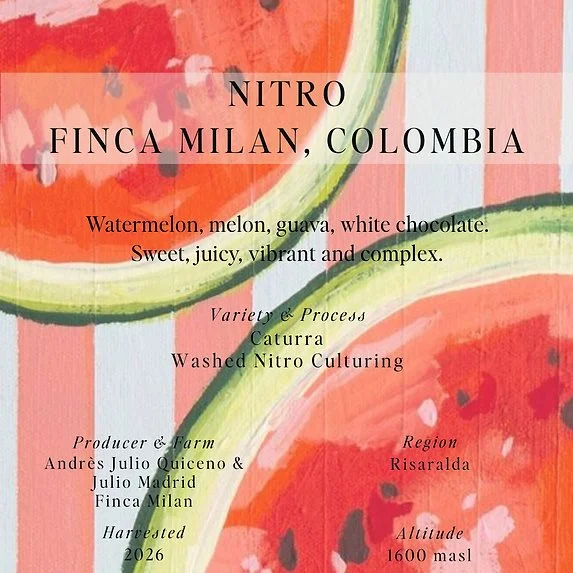
Nitro, Finca Milan, Colombia - Caturra, Washed Nitro Culturing
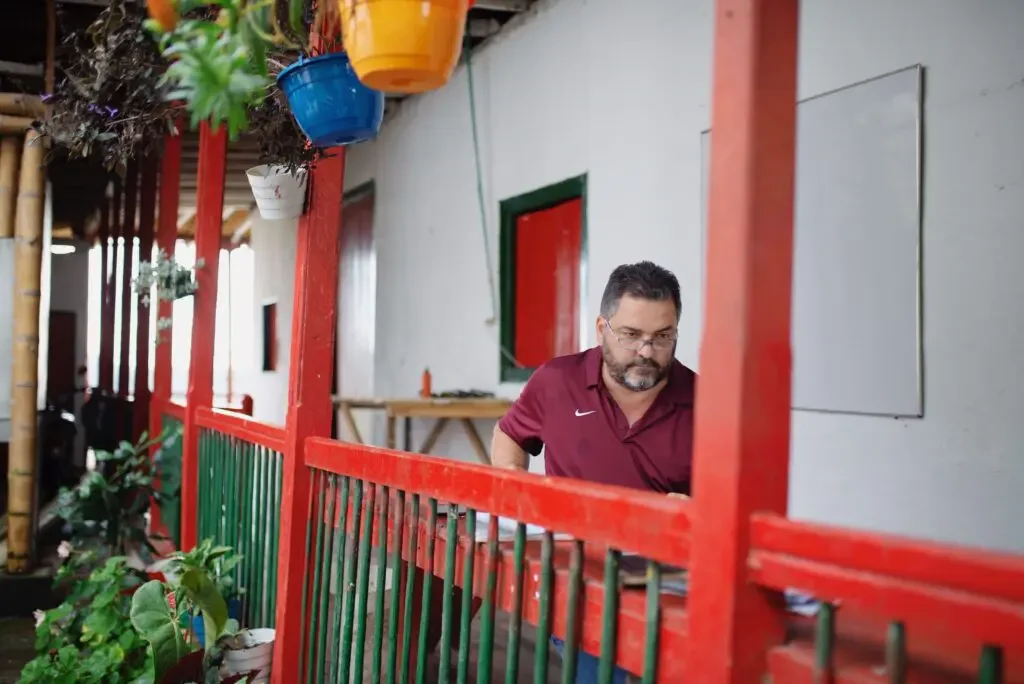
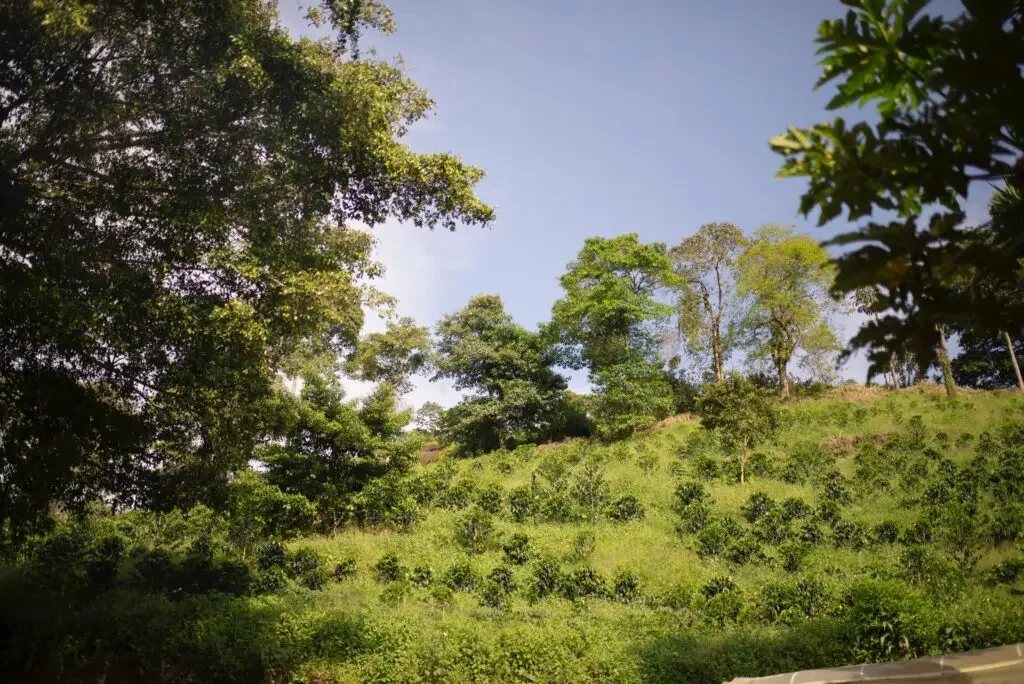
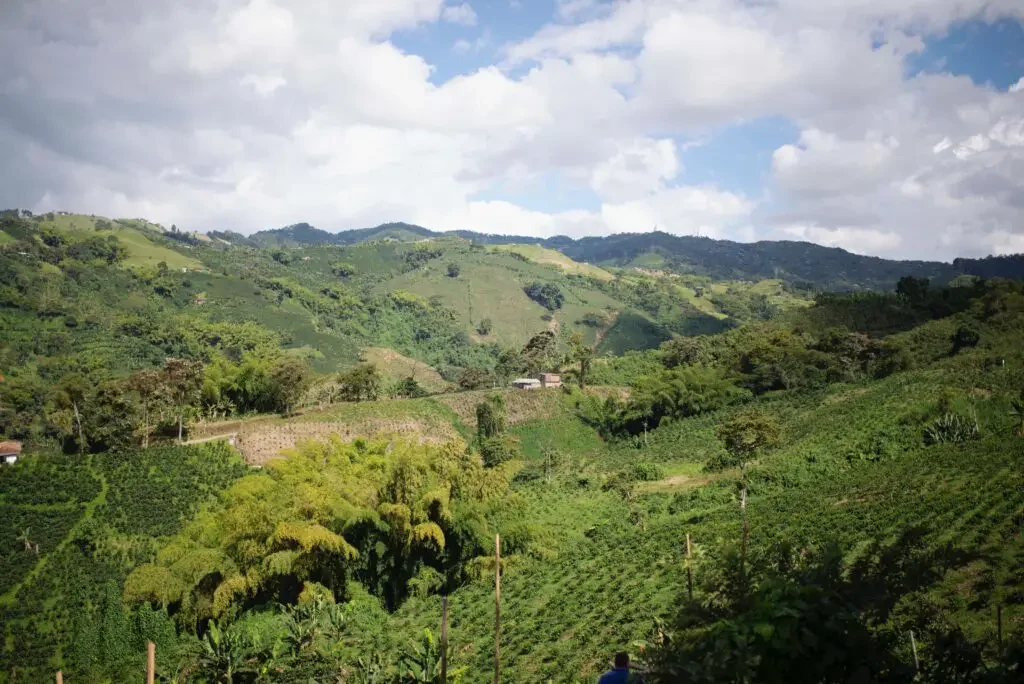
Nestled in the beautiful Risaralda Department of Colombia, Finca Milan is a coffee farm with a story stretching back over 40 years. Run by Julio Cesar Madrid, a third-generation coffee farmer, and his business partner, master processor Andres Julio Quinceno, this farm blends tradition with a passion for innovation and top-notch coffee production. Spread across 250 hectares in the central foothills of the Andes Mountains, Finca Milan enjoys perfect coffee-growing conditions. At 1600 meters above sea level, with year-round temperatures between 18–28°C, the climate here is just right. Julio doesn't just stick to the usual coffee varieties. He's on a mission to discover rare types like Sudan Rume and Laurina, which are celebrated for their complex flavours. Helping him in this quest is his daughter, Maria Antonia Madrid, a biologist. Her research into the sensory effects of microbial starter cultures in coffee fermentation has refined their processing methods, resulting in coffee with truly unique and fascinating flavours. Finca Milan uses a special fermentation technique called culturing nitro fermentation washed, which enhances the flavours and aromas of their beans. In the nitro-washed process at Finca Milan, ripe coffee cherries are first subjected to embryonic stress, which involves raising and lowering their temperature to 12 degrees. This keeps the cherries in optimal condition for further processing. After the cherries are pulped, the beans are placed in a bioreactor. Here, they are inoculated with starter cultures (yeast and bacteria) and watermelon. The bioreactor is then sealed and injected with nitrogen to enhance the metabolic activities of the microorganisms. Throughout this process, the temperature, acidity, and Brix degrees are closely monitored and compared to past data to determine the perfect time to end fermentation and begin oxidation. Once the beans leave the bioreactor, they are initially dried in solar dryers until they reach 40% moisture. They are then transferred to mechanical dryers to further reduce their moisture content to 10%-12%. After drying, the beans rest in the warehouse for about 45 days before being hulled and prepped for export.-
V60
Coffee: 15g
Water: 225ml
Temperature: 88°C
Total Time: ~2:30
Grind Size: Fellow ODE Gen 2 : 7.2
Method
Rinse the paper filter, add 15g of coffee and gently level the bed
Bloom, add 50g of water
Wait 30 seconds
Pour up to 100g total by ~1:00
Keep a steady, controlled pour
Pour up to 160g. Maintain a slow, consistent flow,
Pour up to 225g avoid agitation
-
Producer: Andrès Julio Quiceno & Julio Madrid
Farm: Finca Milán, Colombia
Region: Risaralda
Variety: Caturra
Process: Washed Nitro Culturing
Altitude: 1600 masl
Harvested: 2026 -
Watermelon, melon, guava, white chocolate. Sweet, juicy, vibrant and complex.
-
Roasting date : 22.06.2026
Freeze date : 4.07.2026
Curiosities
-
Coffee was first brought to Colombia in the early 1700’s by Jesuit priests who arrived with Spanish settlers. The first crops were harvested in the Northeast part of the country, but coffee was quickly adopted across the nation by small, family farms as a local cash crop.
The first commercial export of coffee didn’t occur until the first decade of the 1800’s. That first shipment of a humble 100 bags of green coffee (around 60kg each) was the first of what would become a major industry. As coffee consumption grew rapidly in The United States, Germany, and France in the mid-1800’s, so did Colombia’s coffee production.
The growing industry hit a brief decline in the late 1800’s as a civil war broke out in the country, called The Thousand Days War. The fighting, along with a lull in international coffee prices, forced many plantation owners to split up farmland among workers, giving locals ownership and autonomy over their own farms.
In the early 1900’s, the now peaceful Colombia created a logistics system that enabled rural, small-estate farmers to export their coffee more efficiently. This spurred a new age of growth and gave those newer farmers a way to keep producing.
In 1927, the National Federation of Coffee Growers of Colombia was created to protect the interests of coffee growers. This organization quickly came to represent a large portion of Colombian coffee farmers.
Over the next few years, Colombia thrived as a coffee producer and became the world’s 3rd largest exporter, behind only Brazil and Vietnam.
In the 50’s the FNC launched an ad campaign that would create a national icon and generate a thirst for Colombian coffee around the globe. The man who made it happen was Juan Valdez, a fictional character who would appear on a variety of ads to communicate the quality of Colombian coffee.
Juan Valdez and his loyal donkey, Conchita, have been beloved ever since. Many have claimed that this character has become “the Uncle Sam of Colombia”, though we’re honestly not sure if that’s a correct assessment.
-
If you're passionate about specialty coffee, Risaralda is one of Colombia's most fascinating origins. While regions like Huila and Nariño often receive more attention today, Risaralda remains a powerhouse of quality coffee and is home to many innovative producers.
Where is Risaralda?
Risaralda is located in west-central Colombia and forms part of the famous Coffee Triangle (Eje Cafetero) together with Caldas and Quindío. Its capital is Pereira. The region sits between the Central and Western Andes, creating dramatic elevation changes and an incredible diversity of microclimates.
Growing conditions
Typical coffee-growing conditions include:
Altitude: 1,200–2,000+ masl (many specialty farms sit around 1,500–1,900 masl)
Temperature: 18–24°C
Annual rainfall: approximately 2,000–3,000 mm
Volcanic soils: rich in minerals and organic matter
Steep mountain slopes: promoting excellent drainage
Cloud cover: slows cherry maturation, increasing sweetness and complexity.
One unique feature is that Risaralda receives both Pacific and Caribbean weather influences, creating highly varied microclimates even between neighboring farms.
Harvest calendar
Unlike many producing countries with one harvest, much of Risaralda has two:
Main harvest: September–December
Mitaca (fly crop): April–June
The exact timing varies depending on elevation and location within the department.
Common coffee varieties
Traditional varieties:
Typica
Bourbon
Widely planted today:
Caturra
Castillo
Colombia
Increasingly popular on specialty farms:
Tabi
Pink Bourbon
Gesha (small quantities)
SL-28 (experimental)
Chiroso (limited plantings)
Castillo is particularly common because of its resistance to coffee leaf rust, but many producers are now planting more exotic cultivars for the specialty market.
Processing innovation
Historically, Risaralda produced classic washed coffees, but today you'll also find:
Fully washed
Extended fermentation
Anaerobic fermentation
Thermal shock
Natural
Honey
Carbonic maceration
Yeast-inoculated fermentations
Many producers collaborate with exporters and specialty importers to experiment with controlled fermentation protocols.
Typical cup profile
Traditional washed Risaralda coffees often show:
Red apple
Orange
Tangerine
Brown sugar
Caramel
Milk chocolate
Hazelnut
Floral aromas
Medium body
Bright but balanced acidity
Experimental lots may display:
Tropical fruit
Strawberry
Passion fruit
Lychee
Peach
Wine-like acidity
Candy sweetness
Floral jasmine notes.
Farm structure
Like much of Colombia:
Most farms are small family operations.
Many range between 2 and 10 hectares.
Coffee is still predominantly hand-picked, selecting only ripe cherries.
Producers often belong to cooperatives or producer associations, helping them access specialty markets and certifications.
Important coffee municipalities
Some of the best-known coffee-producing municipalities include:
Santa Rosa de Cabal
Belén de Umbría
Apía
Santuario
Marsella
Quinchía
Pereira (surrounding rural areas)
These areas have become increasingly important for specialty coffee exports.
UNESCO Coffee Cultural Landscape
Risaralda forms part of the Coffee Cultural Landscape of Colombia, recognized by UNESCO. This designation celebrates not only coffee production but also:
Traditional farm architecture
Sustainable mountain agriculture
Coffee culture passed through generations
Biodiversity conservation
Family-owned coffee farming traditions.
Why specialty roasters love Risaralda
For specialty buyers, Risaralda offers:
Excellent consistency year after year
Well-developed infrastructure around Pereira
Access to skilled producers
Diverse terroirs within a relatively small area
Increasing numbers of competition-quality and experimental coffees
Many lots strike a balance between the sweetness associated with central Colombian coffees and the vibrant fruit character that modern specialty roasters seek.
-
The Caturra variety is a natural mutation of Bourbon that was first discovered in Brazil in the early 20th century and later became one of the most influential coffee varieties across Latin America, especially in Colombia and Central America. Its name comes from the Guaraní word meaning “small,” referring to the plant’s compact dwarf stature. This shorter structure allows farmers to plant trees more densely and makes harvesting and maintenance more efficient compared to taller traditional Bourbon plants.
Caturra became widely adopted because it offered a balance between improved productivity and good cup quality. The variety responds particularly well to higher altitudes and careful farm management, where slower cherry maturation can enhance sweetness and acidity development. However, unlike modern hybrid varieties such as Castillo, Caturra is highly susceptible to coffee leaf rust and other diseases, which has reduced its popularity in some producing regions over the last decades.
In the cup, Caturra is known for producing clean, balanced, and expressive profiles with medium to bright acidity, good sweetness, and a relatively silky body. Depending on terroir and processing, it can show notes of citrus, red fruits, caramel, panela, chocolate, and floral characteristics. In high-altitude specialty contexts, especially with meticulous washed processing, Caturra can deliver exceptional clarity and elegance.
The variety is also extremely important genetically because it became the foundation for many modern breeding programs and hybrids throughout Latin America. Numerous cultivars including Castillo and Catuaí were developed using Caturra genetics due to its compact size and quality potential.
Although many producers have transitioned toward more disease-resistant cultivars, Caturra remains highly respected within specialty coffee because of its cup quality and transparency of terroir. When grown in ideal conditions and carefully processed, it is still capable of achieving very high specialty scores and highly refined sensory profiles.